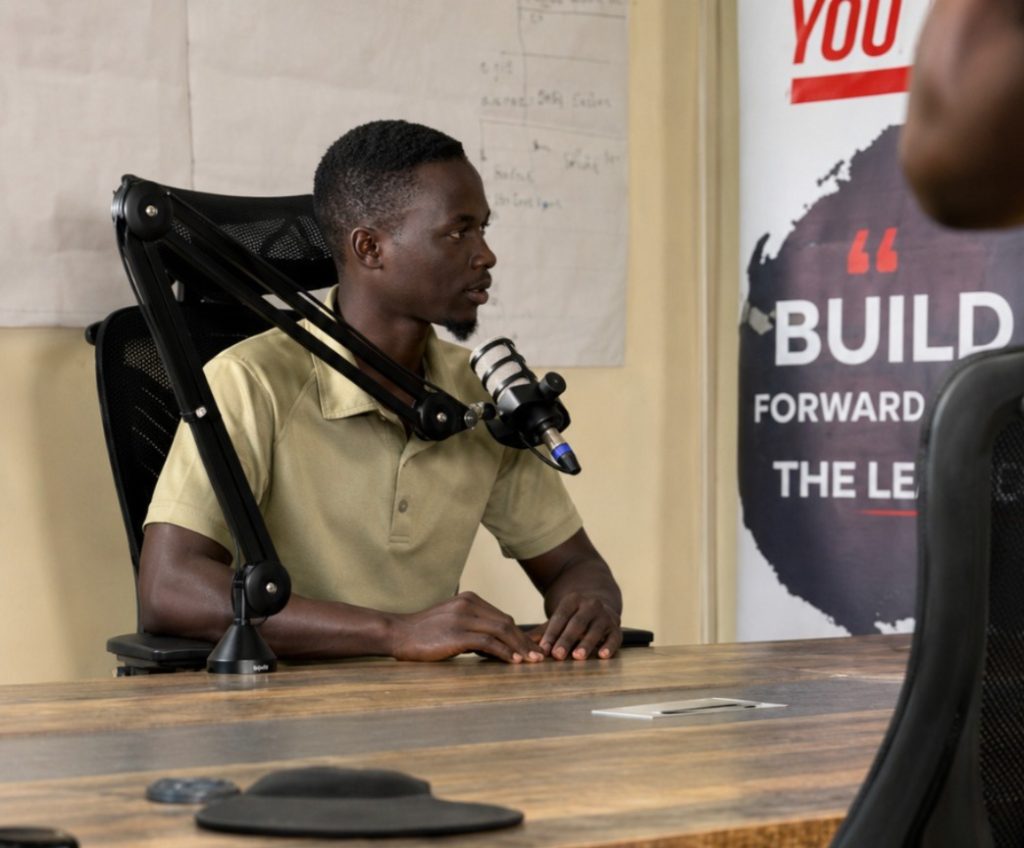
Calvins Moda was born and raised in Mathare, a place he describes as a survival area. Looking back on this moment deeply moved him, as he explained during the interview: “This event really triggered something inside of me.” Calvins’s house was located only ten meters from the river. The flooding event occurred during the night and took him by surprise; he explained that he was woken up by his brother. He added that he had never experienced a flood event like this before, emphasizing that the water was rising at a very high speed. He pointed out that during moments of crisis and urgency, it can be difficult to make thoughtful decisions about what material can be saved. Nevertheless, he and his siblings managed to gather some clothes and place them on higher ground, while electronic devices were lost. The second emergency was to find a place for him and his nine siblings, some of whom have children. In this situation, he was able to rely on strong social and family ties. Reflecting on this traumatic event, Calvins expressed his concern for and solidarity with his neighbors living close to the river, who experienced the highest level of damage.
Nevertheless, Calvins managed to make something out of this event and became more resilient by building a community organization called Swift Slum Integrator Mathare (SSIM). The main goal of the organization is to reduce mental illness because, after the event, he realized how mental instability was costing many lives. He observed how physical and mental health are connected. According to him, the way NGOs can better support people is by fostering conversation; it is the entry point to empowering people’s mental well-being. Then, once you are mentally stable, you can access resources to improve your business or any other economic activities. Mental health is the entry point to any further development. The implementation of public spaces, like resilient centers, is the main solution.
In conclusion, Calvins offered advice to the community. First, honor your emotions; if you feel fear or the need to cry, it is completely okay. Next, people must stand up and speak out if they disagree with their living conditions; they need to make their voices heard. No one should remain silent.